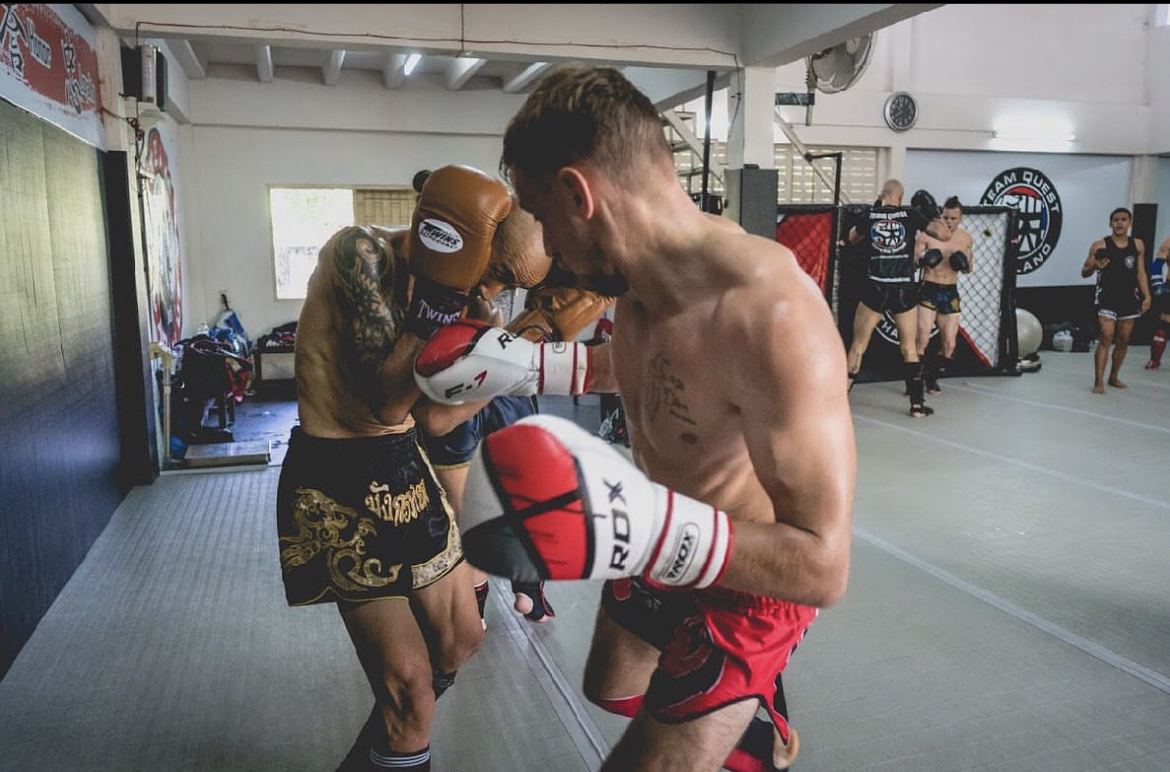
Burnout rarely happens overnight. It’s a very slow process.
It typically presents as flat sessions, constant soreness, poor sleep, or a feeling of being “off” by week two or three of camp. Most fighters and hobbyists go through it at least once. For some, it’s a learning experience. For others, it becomes a cycle.
The good news: it’s largely avoidable.
Here’s how most people get it wrong and what actually works to avoid burnout.
1. Ease into volume.
This sounds obvious, yet it’s the opposite of what happens in Thailand.
I’ve seen this both down south and in Bangkok:
Someone trains 4x per week back home, lands in Thailand, and suddenly trains 4x per day.
Add strength & conditioning. Add yoga. Add extra privates.
No professional athlete trains like this.
But one week later, the inevitable happens; they’re cooked.
Rest isn’t optional; it’s part of a proper training routine. 4
That goes for professional fighters and hobbyists.
2. The Bangkok trap
Training in Bangkok feels brutal because hobbyists and fighters train together. The intensity is higher than most Western gyms, and foreigners aren’t used to it.
What people miss is this: Thais reduce intensity when they don’t have a fight coming up.
They don’t redline year-round. Foreigners do, and then wonder why they burn out.
Even perfect nutrition won’t save you if you never take it down a notch.
3. Carbs are king for performance
Carbs are your primary fuel in combat sports.
Pre- and intra-workout carbs matter, especially when sessions last longer than 60 minutes (most Muay Thai sessions are ~2 hours).
Simple pre-workout options:
- Candy and a banana
- Sourdough with honey or Nutella
- Granola, milk, banana, honey
- Sports drink + fruit
Intra-workout (when sessions are hard & long):
- Sports drinks (with sugar)
- Energy gels
- Candy
- Cola diluted with water
The goal is to fuel the work you’re putting in.
4. Post-Workout: Stay Ahead of Fatigue
What you do after training determines how tomorrow feels.
Eat within 60–90 minutes:
- Protein
- Carbs
A simple rule of thumb:
- Protein: 0.5 × bodyweight (kg)
- Carbs: 1 × bodyweight (kg)
Example (70 kg fighter):
- 35 g protein
- 70 g carbs
Miss this consistently, and fatigue stacks fast.
5. Protein Isn’t Optional When Training Hard
Aim for ~2 g per kg of body weight daily when training hard.
Most fighters in Thailand miss this; eating out makes it hard. But low protein leads to:
- Slower recovery
- Lingering soreness
- Loss of lean mass
- Higher injury risk
Calories alone won’t fix this.
6. Hydration Is More Than “Drink Water. ”
Heat changes everything.
Weigh yourself pre- and post-session:
- Every kg lost = ~1 L of sweat
Drink back 1.5× what you lost, ideally with electrolytes.
ORS solutions work because they speed fluid absorption.
I personally use Lone Wolf Nutrition electrolytes. I’ve recently partnered with them, and we have some interesting things coming soon.
If you want to try them, you can use code ZEROTOALPHA15 at checkout.
Final Thought
Most burnout isn’t caused by “too much training.”
It’s caused by:
- Too much intensity
- Too little fuel
- Too little recovery
- For too long
Fix those, and most camps become sustainable.
Made any of these mistakes?
I work with fighters to plan and execute nutrition strategies for hard camps, including weight cuts, heat acclimation, and sweat rate testing.
If you have a fight booked and want structure instead of guesswork, you can reach out via Instagram or Substack.
Until next time
Alex

[…] recently wrote a post called “How to avoid burnout when training hard.” This post included 6 tips on how to make sure you don’t burn out while training hard. But […]